Improvisational Animation


(start at 29m 16s)


During his talk “Inventing on Principle”, Bret Victor showed off a simple animation he singlehandedly created. In the animation, a leaf falls to the ground, then we pan across a painting of an autumn background, and glimpse a rabbit hopping away. It’s a very simple animation. The quality of the painted images and the timing are very nice. However, it is the motion that I find inspirational in the animation. Not because it is complex or amazingly harmonious, but because of how it was made possible.

In the talk, Victor demos the iPad app which he programmed to use as a medium for creating the animation. Rather than having to specify keyframes and tweening functions, the app allows him to conduct the animation through gesture.

What truly inspires me about this piece not the piece itself, it’s that in creating the piece, Victor almost creates a new medium—improvisational animation. It creates so many possibilities for more spontaneous animations created by a broader variety of people.


Note: This probably falls more on the Tinguely side of art being people just doing stuff…

Things that inspire me that don’t quite count as technological art/design, but that I looked at before writing this:

The machine as an interrelationship

The European Parliament’s definition of machine is an: “an assembly, fitted with or intended to be fitted with a drive system other than directly applied human or animal effort, consisting of linked parts or components, at least one of which moves, and which are joined together for a specific application.” (2006/42/ED -Machinery Directive)
A machine is a tool to support the humans’ work (physically and mentally). But now we blow up the definition of machines’. It’s not only the physical object or device the humans interacting with. Even we are machines. The critical engineer calls every relationship between bodies, devices, agents, forces and networks machines. Machines are expanding from the world of objects into the non-haptic, virtual world.

The point that when we are interacting with a “machine” that makes us itself to a machine is an interesting statement, which influences the way we are thinking about future interaction design.

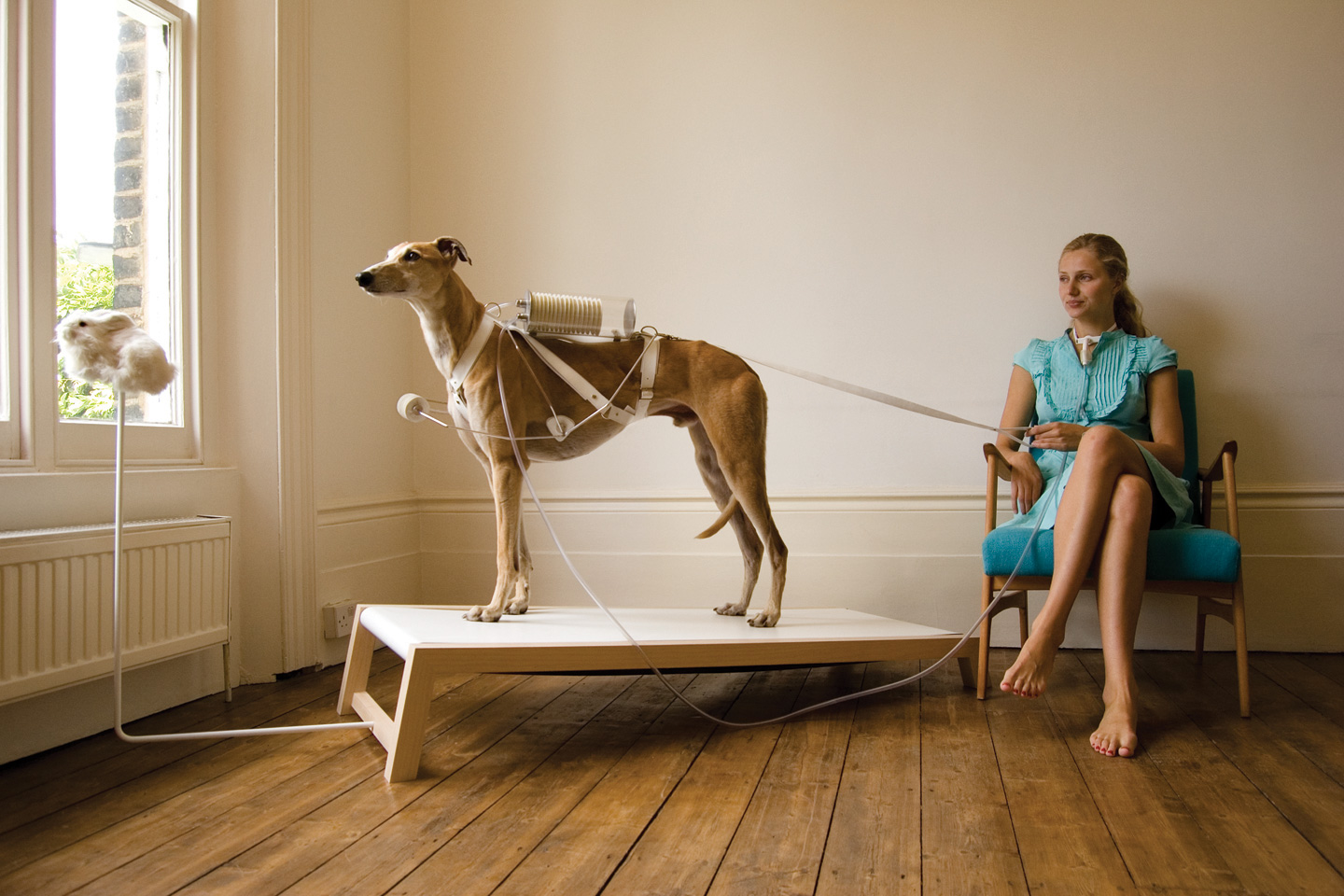
For me an interesting concept about the interaction between human – machine – animal in future: www.cohenvanbalen.com

Life-Support-ventilation-dog_print-a4dialysissheep

Ticha-LookingOutwards-1

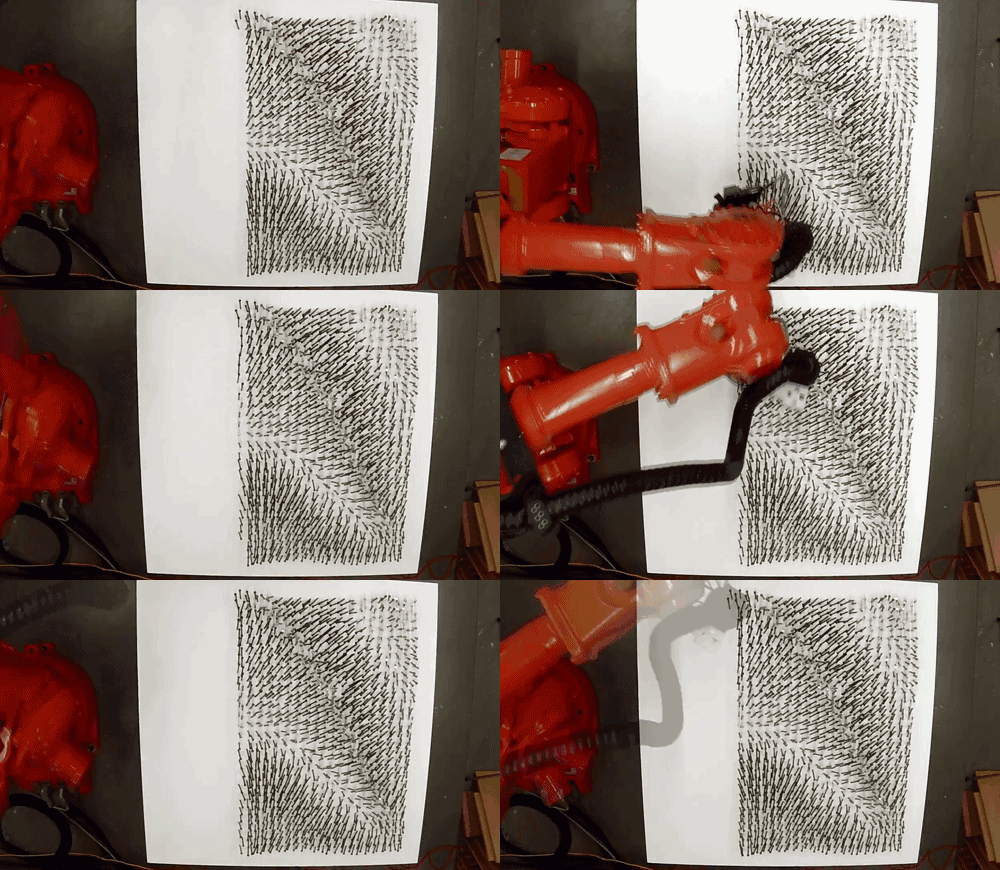
Robot Nail Art by Charles Karim Aweida

In an effort to ‘create tangible artifacts from intangible forces’, Aweida uses a robotic arm to place nails in a foam board in a manner which emulates wind movement. I admire this project profoundly for its simplicity in addition to the fact that very organic patterns using inorganic materials. What I find most interesting about the project is how entrancing it is to watch the robot carefully place the nails in the board with such precision – the strange gratification that results from watching such a meticulous action is evidence of the fetishization of the robot, and enticed me to think about how robots are fetishized in modern society.

Some improvements:

  • Documentation could have been a little bit more descriptive. I really like the whirlpool patterns that he added at the end and it’s easy to infer that those were created by the robot, but I wish the artist elaborated on what the color choices meant.
  • Perhaps the artist could experiment with different materials that can be placed into the foam board to see how it alters the piece.


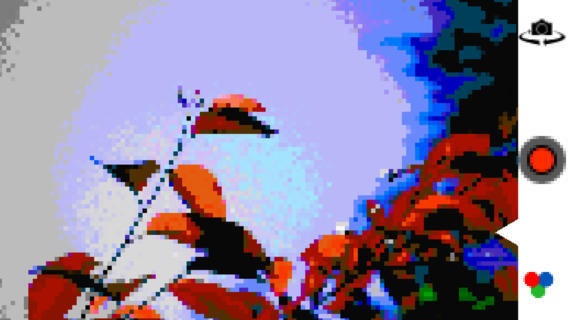
Belowrez app by Adam Mathes

As someone who holds high expectations for all iOS-related products, I must say that I was rather disappointed in this app. While Belowrez achieves its goal of evoking a certain nostalgic feel towards old-school NES games, I feel like the developer is not pushing the app to its full potential. When I took 15-122, we had to write code that manipulated images in different ways, and one of the effects was exactly the same as the one for this app. While I really appreciate that the developer added some additional color scheme choices for the sake of variation and like the fact that the user is able to control the pixel size, I cannot help but feel like the camera is missing something more.

Some improvements:

  • Could make the images even more stylized to truly set it apart from other cameras with posterizing photo filters.
  • Perhaps add some features that push the concept of creating an NES-inspired app further.


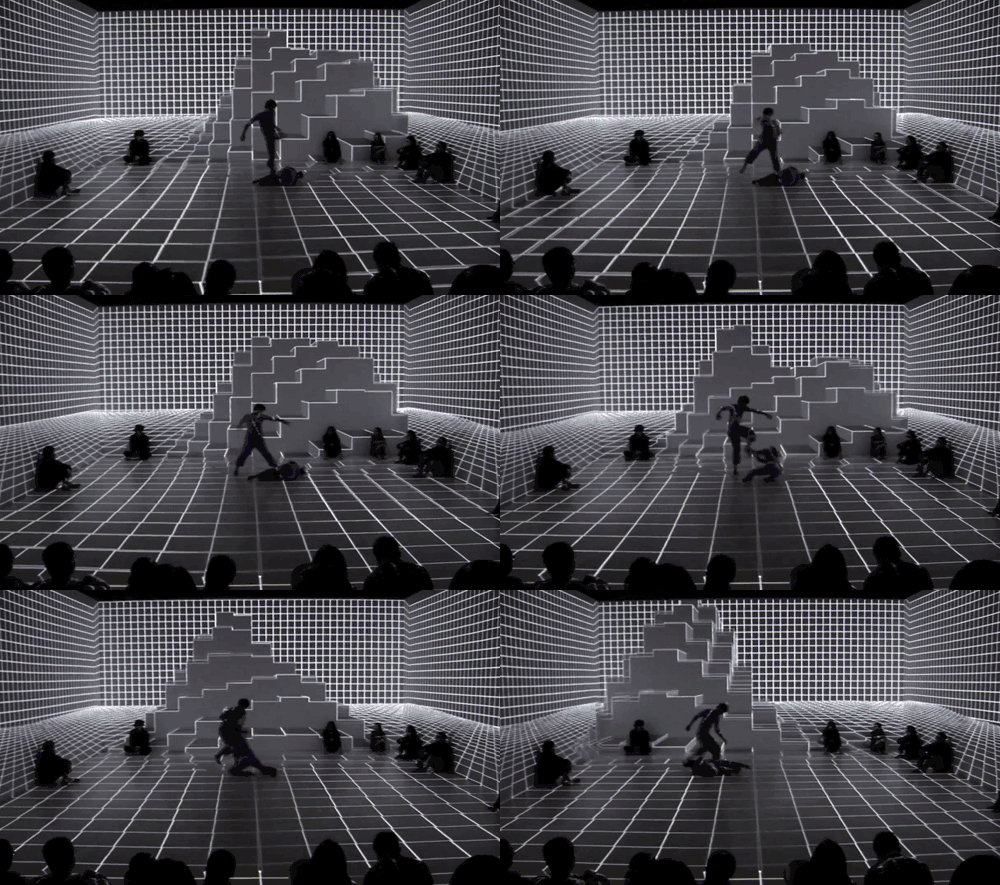
Seventh Sense by Ultra Combos and Anarchy Dance Theatre

I both admire this project profoundly and am intensely surprised by it. Seventh Sense is certainly not a conventional dance performance with fancy stage effects – the specially designed interactive space created by Ultra Combos both creates a unique visual experience for the audience and redefines the meaning of contemporary dance. What I like most about this project is how the environment reacts so smoothly with the dancers – giving the viewer the impression that they are truly a part of this surreal space. This beautiful marriage between dance, art, and technology is truly a pleasure to watch.

Some improvements:

  • As I have only watched an excerpt of the performance, I am not entirely sure of how the space was used to enhance the dancing. So far my only suggestion would be to experiment with as many environments and effects as possible without looking too over-the-top.

Inspirations

One of the most memorable moments was when I first came across the project by Camille Utterback, “Text Rain”. This project involves projectors and computer programming that allows cameras to detect the placement of dark objects such as people and influence the placement of the words on the screen. The falling text appears to be moving according to the movement of the audience. Camille and Romy Achituv created this amazing phenomenon. Although there has been much improved versions similar to “Text Rain” today, the fact that this piece was from a time ago, makes it all the more astounding. This project paved roads for future projects that involves human and technology interactions, bringing the audience into the work of art and allowing the viewers to have a direct impact on the piece. Some of her later pieces, such as the “Active Ecosystem”  shows this progress, as Camille installs large panels on an elevator with a fish that interacts with the elevator.

http://camilleutterback.com/projects/text-rain/

http://camilleutterback.com/


Ralph-LookingOutwards-1

Stone Spray Project: http://www.stonespray.com/

This is a machine that prints 3D object out of soil and a liquid binder, much like Markus Kayser’s 3D sinter. The Stone Spray can operate entirely on solar energy as well, but is not completely dependent on it like the sinter, so it is functional even during the night or under cloudy conditions.

I greatly admire the resourcefulness of the project, offering an ecological alternative to conventional 3D printing. Its design allows the user to build complex structures on-site with minimal preparations, so its potential is not only limited to printing out curiosities for fun. This could have great practical use in construction, and the structures it creates are surprisingly sturdy.
Though for now, it is still limited to printing out small, coarse curiosities, I’m sure further development will allow smoother printing as well as building on a large scale.

Void: https://www.creativeapplications.net/environment/void-3d-robotic-structure-suspended-between-buildings-paints-with-light/

Void is a mechanical structure by Wit Pimkanhanapong which suspends a light source within a space and moves that point of light freely to create a spatial drawing over time. This piece is a continuation of a piece by Jurg Lehni who managed to create a structure that moved a drawing tool across a 2D plane.

I was surprised by this piece because of how simple the setup was. I would not have imagined such smooth movement through any point in space being possible through a mostly physical contraption utilizing only 8 stationary winches.

Though this is probably due to physical limitations, the movement feels too sluggish. The gifs presented on the page shows the movement sped up, and it forms a beautiful gesture which is probably interesting no matter what angle you see it from. The sluggishness hides this gesture.

Sonumbra: https://www.youtube.com/watch?v=CF9rqiHNDuA

This is an installation of umbrellas which emit streaks of light that resemble vines in response to movements within the umbrellas. According to the description, the artist intended to breathe harmony and musical rhythm in the viewer’s steps as he or she walked along. Many works by Loop.pH seem to involve intricate lattices of lights much like this project.

Its choice of location is nice; it appears to be outdoors near shrubbery, breeding an atmosphere of a magical, otherworldly forest. The intricate patterns created by the lattice of light are also very pleasing to look at. Its humanitarian value is also not to be overlooked; it is proposed to be used in impoverished villages to both provide shade and light with only solar energy.

Unfortunately, the iteration presented in this video does not seem appropriately responsive to the participant. Sometimes, the entire lattice glows while the man walks lightly or stands still, and the umbrellas generally respond with much delay. In addition, the algorithm that controls the pattern of light does not seem to create a sense of rhythm as advertised very well.
Maryyann-Looking Outwards-1

“Discuss one project that you admire profoundly (why?)”

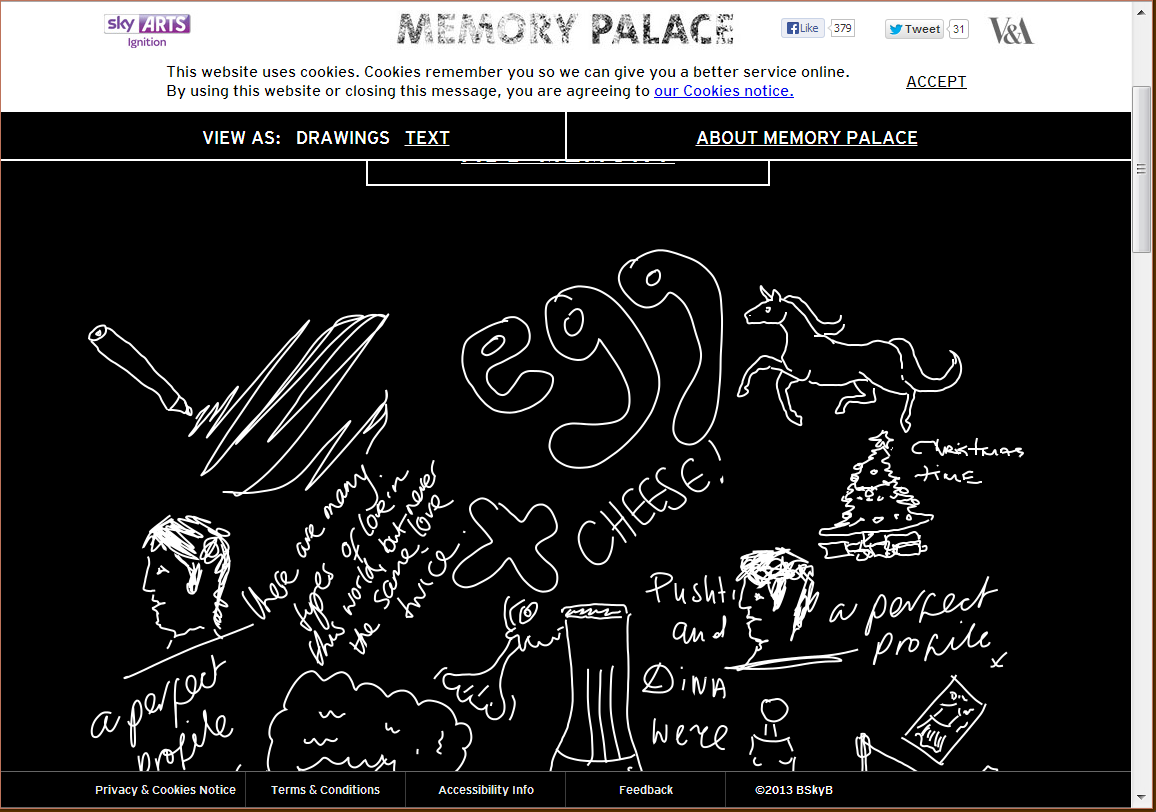
http://skyartsignitionmemorypalace.com/palace/index.html#lev

memory

The interactive App piece created by Johnny Kelly and produced by Nexus Interactive Arts, called Memory Palace explores the possibilities of the combination of technology and audience. He was commissioned to create a piece about a story where the main character is allowed to provide the future generations with one of his memories. Johnny’s piece invites viewers to draw their most precious memories onto a tablet and digitally send them onto a viewing board, which is then printed into a poster after the board is filled. I found it extremely admirable that through the sharing of memories, people of many cultural backgrounds and ages are brought together to share their most valued thoughts with strangers. It is really a beautiful and magical display. The ability of the project to create a new bound between strangers is very phenomenal, seeing how memories are such important to being human. One aspect I think that could have made the project more successful or just more playful was to also create a animated version of the board, where some drawings slightly moved. That would almost bring the long past memories back to life.

“one project that surprised you (why?)”

Corona Perspectives – JWT Spain

corona_tennis

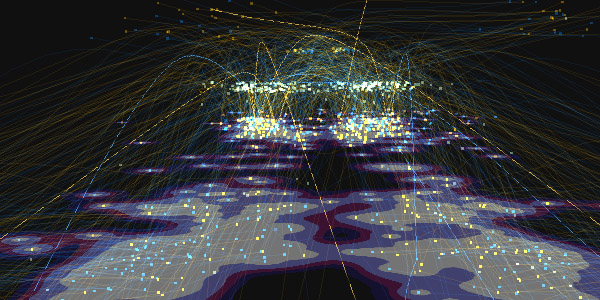
With the help of JWT, a global advertising and marketing agency in New York City and support from the development studio Espada y Santa Cruz, Corona Perspectives was born. This program allows a tennis match to be recorded, played back through a 360 degree perspective, as well as represent ball distance and where the ball touched the ground. This creation not only allows the audience to experience the game in a whole new level, but also will be very useful for tennis coaches or tennis players since it captures tiny details of the ball. The project can be related to the US Open Tennis Real-Time Data Visualization project. Presented by the US Open Pointstream, this project explores the statistical data generated during a tennis match in 3D. I found the heat-mapping of the ball, which allows the viewer to accurately distinguish the landing of the ball on the court and the trajectory filters most impressive because they will not only create a playback effect, but as contribute to the tennis world as training guides. I think another touch that could have been successful was a playback option of the match, so that the viewer can see the trajectories in action. I was really surprised and amazed by the ability softwares can have through the combination of design and computer programming.

“one project that could have been great, but disappointed you (why?).”

fish

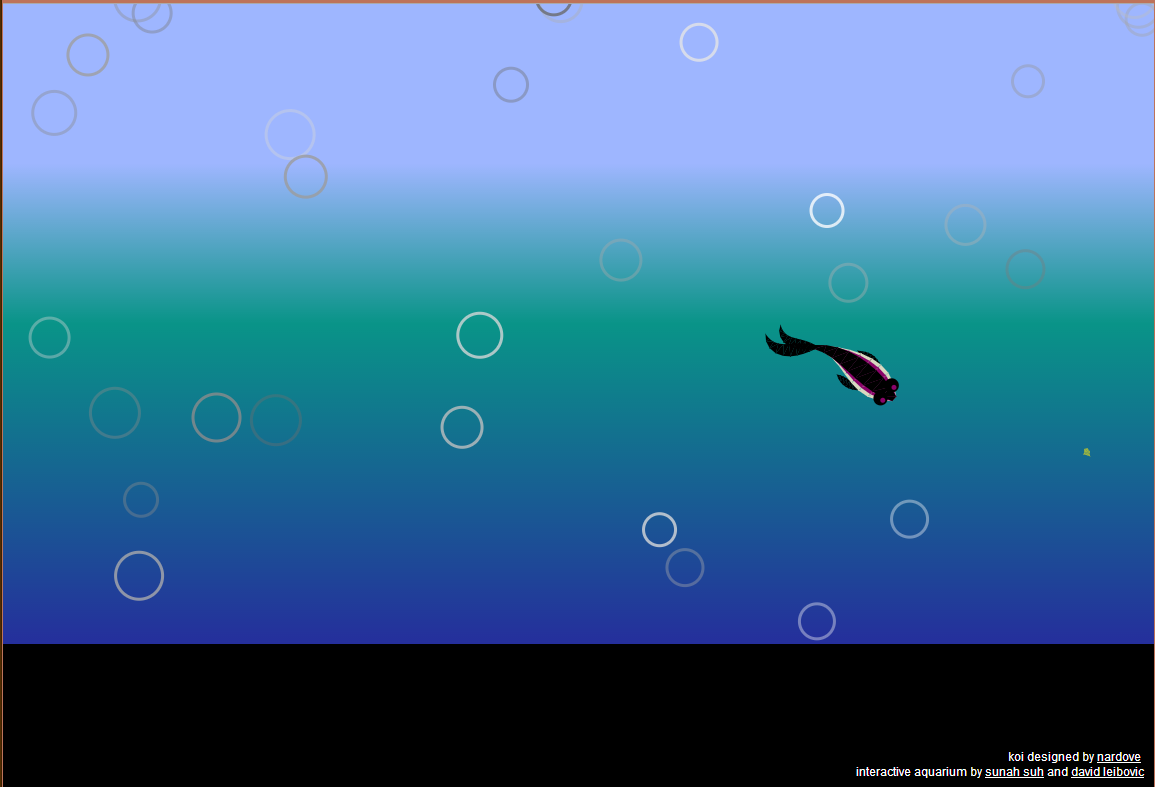
“My Life Aquatic” is an interactive game by David Leibovic, Ricardo Sanchez, and Sunah Suh that involves a fish of a randomized color and size which follows the mouse slightly when the user moves the cursor. Food is then displayed on the screen by ones, which the user can feed the fish. At first glance, the interactive exhibition seems very interesting, combining the color choice and the music, along with the natural movement of the fish. However, after several minutes, the motion becomes too repetitive to capture any further interest. I found the fluid movement of the fish to be very eye catching. One improvement I would have made was to add more creatures in the background or to interact with. Furthermore, the user would have been more involved if there was some progress in the interactions. Ricardo Sanchez possesses his own website which is littered with little animated designs present in this project.


mortal engine – chunky move


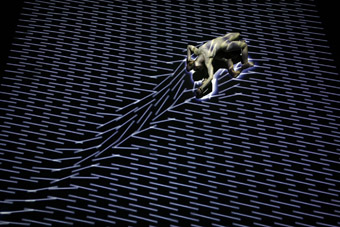
Mortal engine was for me not only an inspiration it was the reason why I want to explore the new/digital media. The first time I saw this video I was fascinated, magnetized, breathless. This performance touches me emotionally and tells me stories without one word.

Chunky move, the producing company of Mortal Engine, describes their concept as “a dance-video-music-laser performance using movement and sound responsive projections…” It sounds like a overload of visual impressions or like a technical spectacle. However, all different media together are telling the story. Each one has its meaning, each one supports the others, together they build an amazing work. The artwork is concrete enough to encourage the storyline but also abstract enough to keep space for the dancers’ expression and everybody’s own vision. With this work Chunky move reached and inspired an audience which would usually never get into dancing performances. The visuals and the sound supported the dancing and put the idea and the core across.

The basis of this performance is the interactive system of Frieder Weiss, a German “engineer in arts”. He is working for over twenty years now in the field of real-time computing and interactive computer systems in performance art. His system allows that dancer – projection – laser and sound can communicate without delay.

https://www.youtube.com/watch?v=sbjOMualLVs
www.chunkymove.com

CREATIVE TEAM

DIRECTION AND CHOREOGRAPHY Gideon Obarzanek
INTERACTIVE SYSTEM DESIGN Frieder Weiss
LASER AND SOUND ARTIST Robin Fox
COMPOSER Ben Frost
COSTUME DESIGNER Paula Levis
LIGHTING DESIGNER Damien Cooper
SET DESIGN Richard Dinnen and Gideon Obarzanek
MULTIMEDIA ENGINEER Nick Roux

DAVE-LOOKINGOUTWARDS-1

1.

The “Unnamed Soundsculpture” piece is made by the studio Onformative, which is comprised of Cedric Kiefer and Julia Laub. The piece is a recording of a chorographic dance, represented as a set of data points reminiscent of sands, which freezes some motions of the dancer and then fall down with gravity as the dancer continues on forward. This represents a form of rebellion against modern technology to me, as the dancer is fighting against the ever falling data to express herself in an individualistic and powerful manner. In the end, the constant flow of information drags her down into nothingness, signifying the strength of technology upon our lives. Besides the implications this piece had on me, I was also deeply impressed by the technical details, as I have not thought of data visualization being able to be used in such a manner. My only problem with the piece is that it is a bit long; even 70% of the content would make me feel and think the same way. Similar data visualization technique is used in the music video of Radiohead’s “House of Cards”, but this piece is more active which I feel is superior.


2.

Genesis is a short film made by Andreas Wannerstedt. We enter a facility in the snow, where we are presented some advanced technologies, which then proceeds to create a mini big bang, producing a universe, and finally presenting us a mini planet. I initially thought not too hard about the meaning of the piece, for the only aspects which caught my attention were the technical details, but the true message is presented as a newspaper article in the end: “Create a mini world; become a mini God”. I have been struck by a theme I did not predict. The creation of a mini world and becoming a mini god is similar to the short film The Gloaming (Le Crépuscule) by Nobrain. However, The Gloaming is a critique on society while Genesis is a critique on technology.


3.

Metamorphosis generates the growth of branches and butterflies based on an algorithm written in Processing. The growth of the tree branches is absolutely gorgeous. It looks more organic than reality. The patterns generated by the algorithm are really well done. The color choices stick out also; the orange flame-like cloud behind the branches make stark and beautiful contrast. However, I feel the existence of the butterflies served no purpose. Because they lack animation (ex: wings flapping), they take away from the organic feeling the growing branches conveyed to me. Their movements are also erratic at times also, making me feel like they are just funky decorations. I feel if they flew out from the trees instead of being attached to them, I would be happier. The vector art style of the branches and their growth reminds me of the indie game Pixiejunk Eden, but the overall feeling is different as Metamorphosis is not a game and not interactive.

The Wilderness Downtown

http://www.thedonutproject.com/wp-content/uploads/2010/08/the-wilderness-downtown-arcade-fire.jpg
http://thewildernessdowntown.com/

‘The Wilderness Downtown’ is an interactive multimedia film featuring Arcade Fire’s  “We Used to Wait”, created by music video director Chris Milk, and a team of Google employees lead by interactive artist Aaron Koblin to show the technological and aesthetic capabilities of Google Chrome. Through user input of an old home address, an entire audio-visual interaction is then tailored to the individual using Google Earth and HTML5, creating a unique experience that tugs at the heart strings of nostalgia while also blowing audiences away through the flexing of Google Chrome’s technological muscles.

There are many aspects of the project I admire; the synergy of its audiovisual elements, the quality of thought and emotion in those elements, the customization of the experience to an individual (which all the more enhances the nostalgic themes of the song), and so on.

What strikes me the most about this project however was in the intention of its creation. Through a project like this, many parties had the opportunity to achieve a variety of things. With Google needing to find ways to be more personable to its users, finding new creative ways to advertise its products, it seemed most natural for it to invest in the creative spirits of new media artists such as Chris Milk, Aaron Koblin, and the employees in their blossoming Data Arts Team. For these artists, having the rich foundation of a large corporation to build off of is freeing to the creative spirit through the expansion of potential, unbound by concerns of resources. This is where I personally believe the future of culture works should head, exploration and building upon the legacies of those before it, providing a balanced hybrid that straddles a familiar comfort with the spice of the new.

In a nutshell, this project to me represents a harmony of harmonies–it explores the synergy of the arts with technology, of companies with individuals (both the artists and customers), of producer and end user, music and visuals, and more.

Critical Engineering: Deconstruct to construct

   3. The Critical Engineer deconstructs and incites suspicion of rich user
    experiences.

As a design student constantly primed by the institution to create rich user experiences, the notion of deconstruction and suspicion of these experiences comes as an unusual surprise. But perhaps it’s just the nuances of language playing with me here. From my understanding, what Julian, Gordan and Danja mean by this tenet of their Critical Engineering Manifesto is the breaking down of experiences to its basic parts, processes, artifacts, and more in order to establish an understanding of what is really there.

It is only through such understanding of the truth in all its transparency can the true problem spaces be determined, and the appropriate solutions for it.

I can’t help but think of the rich ecosystems that services like Google, Amazon, Facebook, and the other internet giants provide. Although they are prominent and enjoyed in our modern culture, it is only now that we are beginning to fight for an understanding of how these ‘black boxes’ of services create those experiences. As Julian himself puts it, “To find a point of exploit—an entry point—in a black box is to produce knowledge. Sometimes this also reveals how we are being exploited by that black box” (Fortune).

In light of growing tension upon privacy vs. publicity, the NSA (or in China, the Great Firewall), and so on, it seems all the more critical that we observe, question and break down in order to create understanding.

Source(s):
Fortune, Stephen. “Engineering Critically.” Dazed Digital. N.p., June 2013. Web. 28 Aug. 2013. <http://www.dazeddigital.com/artsandculture/article/16269/1/weise7>.

Written by Comments Off on Critical Engineering: Deconstruct to construct Posted in Assignment-01-3