Category Archives: looking-outwards

dsrusso

15 Jan 2015

Hexi – responsive wall from Thibaut Sld on Vimeo.

HEXI // THIBAUT SID

Hexi by Thibaut Sld is a responsive wall system that utilizes sensory input from a depth camera and outputs to an array of wall mounted servos.  The wall responds to various human behaviors by moving each individual panel in the array.  The panels are coordinated in such a way that a fluid rippling effect is exhibited by the wall.  The fabrication for this installation is quite streamlined and clean.  Everything from the panel’s polished appearance, to the tremendously accurate tolerance of the servo hardware creates an extremely fluid execution.  Although the interaction between people and the installations very playful and energetic, I think this specific installation would be a very compelling way to display information of some kind.  The object and it’s interaction appears to exist in it’s own vacuum of space, and could possibly benefit from reaching out further into the world.  The exact sources of inspiration for this project are difficult to track down, however upon close examination pieces like Tessel and Versus from David Lettelier come to mind.  Both use similar interaction typologies coupled with very smooth mechanical action to create engaging experiences.


Breaking The Surface [Interaction Test / Tracking Software / Collision detection] from Bjørn Gunnar Staal on Vimeo.

BREAKING THE SURFACE // BJORN GUNNAR STAAL (SCANDINAVIAN DESIGN GROUP)

Breaking the surface by Bjørn Gunnar Staal is an interactive installation that uses a large array of suspended acrylic tubing to create an implied dynamic surface.  The surface directly responds to inhabitants below it.  The actuation system uses a combination of motors, wheels and a depth camera.  This installation is impressive in the level of immersion it can reach with a participant.  Once in the center of the installation, outward views are easily compromised.  The data processing ability and general agility of the installation is very impressive as well.   It sits as a very complete and visually impactful piece, however I think the nature of the actuated tubes was a bit of a missed opportunity.  The combination of some more advanced geometry coupled with dynamic lighting could have made the piece a lot more engaging.  The lineage of Staal’s pieces are very interesting in that they seem to stand out from many other artists that perform at an environmental scale.  The open frameworks apps that was written serves as both a simulation tool through the design process, as well as the controlling software for the physical installation. To me this a fairly new idea and would love to track down more examples like it.  The thematic interaction typology is very similar to other projects performed by Staal and Scandinavian Design Group, although it’s very unique in its very aggressive kinetics.

Yeliz Karadayi

15 Jan 2015

“Generative Typography Experiments” by Reza Ali. 2010
rezaali-font1 rezaali-font2

rezaali-font3

Generative Typography Experiment #5 from Reza on Vimeo.

Reza Ali is an amazingly talented computation designer who shows off some pretty interesting experiments with typography. Reza uses various computational strategies to get his design effects from fluid simulations, spring forces, particle simulations, and audio-input. Although the designs are still images, their effects give a feeling of liveliness and movement. The real interest for me in this project is the complexity of the computation to depict letters, which are quite basic forms. This level of complexity in the image allows for the designer to convey a story within the image such that the word paired with the animation style can work together to create a story or evoke an emotion. Reza seems to avoid doing this, as he uses only his name and does not seem to be controlling the effects beyond basic behaviors, which yields no hierarchy, and thus no story or emotion. This is something I’d like to look into.

More

“Repository Activity By Language” by Eduarda Mendes Rodrigas. 2012
datavis-1

Eduarda wins third place in a GitHub data challenge with this project, used to lay out a map of all of the languages used in GitHub. The orange text shows languages while the blue shows project repositories on GitHub. This image shows elements of design embedded into the visualization with an applied aesthetic. Using a force directed graph, a hierarchy is made visible so that the reader. This map is actually pretty awesomely packaged in a web app that works with pinch-zooming on my touch screen and responds very smoothly and renders quickly. What lacked was an interface with the actual map, making it truly interactive by making the buttons clickable and opening up a second layer of information.

The Map
More

ST

14 Jan 2015

I wasn’t under the impression that we had a theme for this week’s LO, here are two projects I like, theme-less.


render_1

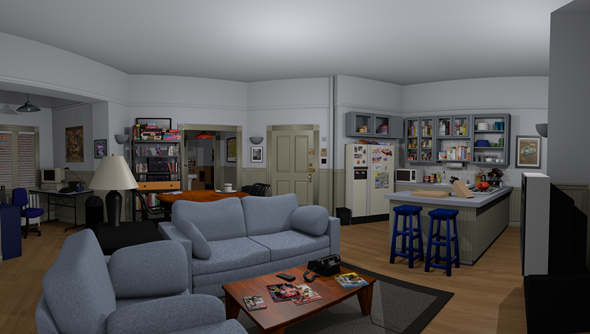
Jerry’s Place is a virtual reality environment inspired by (television character) Jerry Seinfeld’s apartment. The project was made by Greg Miller, using Blender and Unity. One aspect of the project that inspires me is that the project was completed by a single developer as a personal project. Just using 2 dimensional screenshots, he was able to create a 3 dimensional space that can be explored. Having access to an oculus rift, I am excited about the opportunity to turn my own 2 dimensional works into a space for exploration. This project showed me that with some experience in blender and unity, I can create my own virtual reality. This also brings me to my critique of the project: because Seinfeld is based in reality, they use real props, and rooms have real lighting and texture, which can be especially hard to replicate in blender, especially at hobby level. I would love to see how a cartoon world could be translated.

http://jerrysplacevr.com/


CA_nica_560

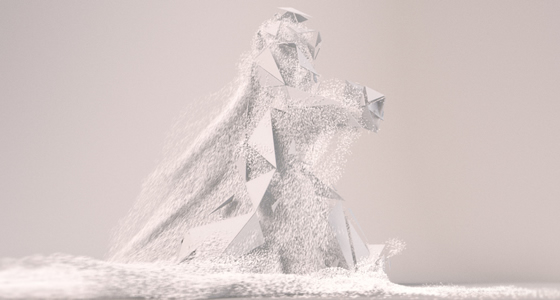
Walking City is an animation which features a walking figure, which is gradually and continuously changing forms throughout the 7:45 video. This project stood out to me due to my interest in animation. The use of texture throughout the video was particularly interesting, especially due to the lack of color. The importance of sound in animation was made very apparent in this video, which relied on sound to define abstract forms. The animation uses the familiar motion of a walk cycle to emphasize the similarities between different forms and materials. This was an effective approach because the motion is so common, but it also felt like an easy/obvious choice. According the its creators, Universal Everything, the animation is inspired by design, animation, sculpture, fashion, and architecture. After seeing the video, I would say that this is fairly clear.

http://prix2014.aec.at/prixwinner/12662/

dave

14 Jan 2015

Metrico is a platformer on PS Vita by Digital Dreams that uses inforgraphics as the environment. It is interesting because it combines games and data visualization into a single piece. However, I felt the project missed a great opportunity. Sure it uses the aesthetics of visualization, but there are no actual underlying data behind anything. Numbers and bars are arbitrary and just exist to serve the gameplay. It reminds me a flash game where one can surf on stock market slopes, and its art style is similar to Monumental Valley. Finally, I have rants against this game only being on PS Vita, meaning it will not be accessible to many people, like me.


Stanley Piano is made by Digital Kitchen. It takes in song requests via Twitter and plays them. I really enjoyed the video presentation of the project, however the actual performance part is a bit short. I also enjoyed that social media aspect, which allows people to have their own personal musician who plays their requests. It is very similar to self playing pianos that have existed for a long time now, but because of Stanley Piano’s interactive aspect, it feels a lot less mechanical than those. Also, because its insides can be easily viewed, it also feels less creepy than those self playing pianos.

Zack Aman

14 Jan 2015

KHStGallen_Darknet_2014-10_MG_3304_LowRes_crpd_540

Random Darknet Shopper (2014)

The “Random Darknet Shopper” is a bot that buys a random item from the Agora marketplace once a week, and has the item mailed to the !Mediengruppe Bitnik art collective, who display the item in a gallery space. The bot is given an allowance of $100 a week to make its purchases.

I was initially drawn to this project by this article on Motherboard, which details just the “best things” that the bot purchased. There’s something comical about the way it’s covered by Motherboard; the bot is heavily anthropomorphized and given a personality by way of the products it purchases and a hypothesized reason or backstory for the purchases. It doesn’t seem like this was intentional on the part of the authors, but raises an interesting set of questions regarding agency and legality. Specifically, at what point would a robot be considered to have agency on its own? At what point would an illegal action, such as purchasing drugs, be attributable to the robot and not to the creator?

The authors do not say much about their intention, but they seem focused on giving tangibility to the dark web and describing its idiosyncrasies. Several of their descriptions for the products focus on the quality of product or service, such as “Shipment took 2 weeks,” and “Ordered from the U.S. – arrived from Singapore.” These descriptions remind us that real people and systems are on the other end of the transaction.

The “Random Darknet Shopper” is influenced by the Random Shopper by Darius Kazemi, which makes random purchases on Amazon. Darius’ intentions were to break out of algorithmic profiling. Both bots seem are conceptually similar to other bots, such as twitter bots, but with a very specific method of agency.

2015 Interaction Awards: Flutter from Interaction Design Association on Vimeo.

Flutter – by Alex Rothera, Ivor Williams, Jacopo Atzori, and Aaron Gillett

Flutter is a mobile application designed for grieving adolescents to help them express themselves and give form to their feelings. The user taps on the screen to define base notes and then can place objects above or around the note to modulate it.  This project is particularly interesting to me for two reasons: the goal of empowering creativity and the design process. When I think of interactive art, one of the main things that comes to mind is designing interaction from the user’s perspective and allowing them to explore and create on their own. Regarding the design process, it’s just great to hear them talk about how they used contextual design and see the process I’m learning at CMU in action.

I thought the parts that worked especially well were the end, “captured” musical result and the simplicity of interaction and control. However, the abstraction of musical control seems a bit simplistic, almost like bad Instagram filters. Maybe the abstractions just grate against my mental model of electronic music and would work well for the intended audience.

They don’t say what their specific influences are, but there are many generative music applications.  In particular, Flutter reminds me of the Brian Eno application Bloom, as both have a down-tempo, subdued musicality.